Azelaic Acid Made Simple: How and Why to Add It to Your Skincare Routine
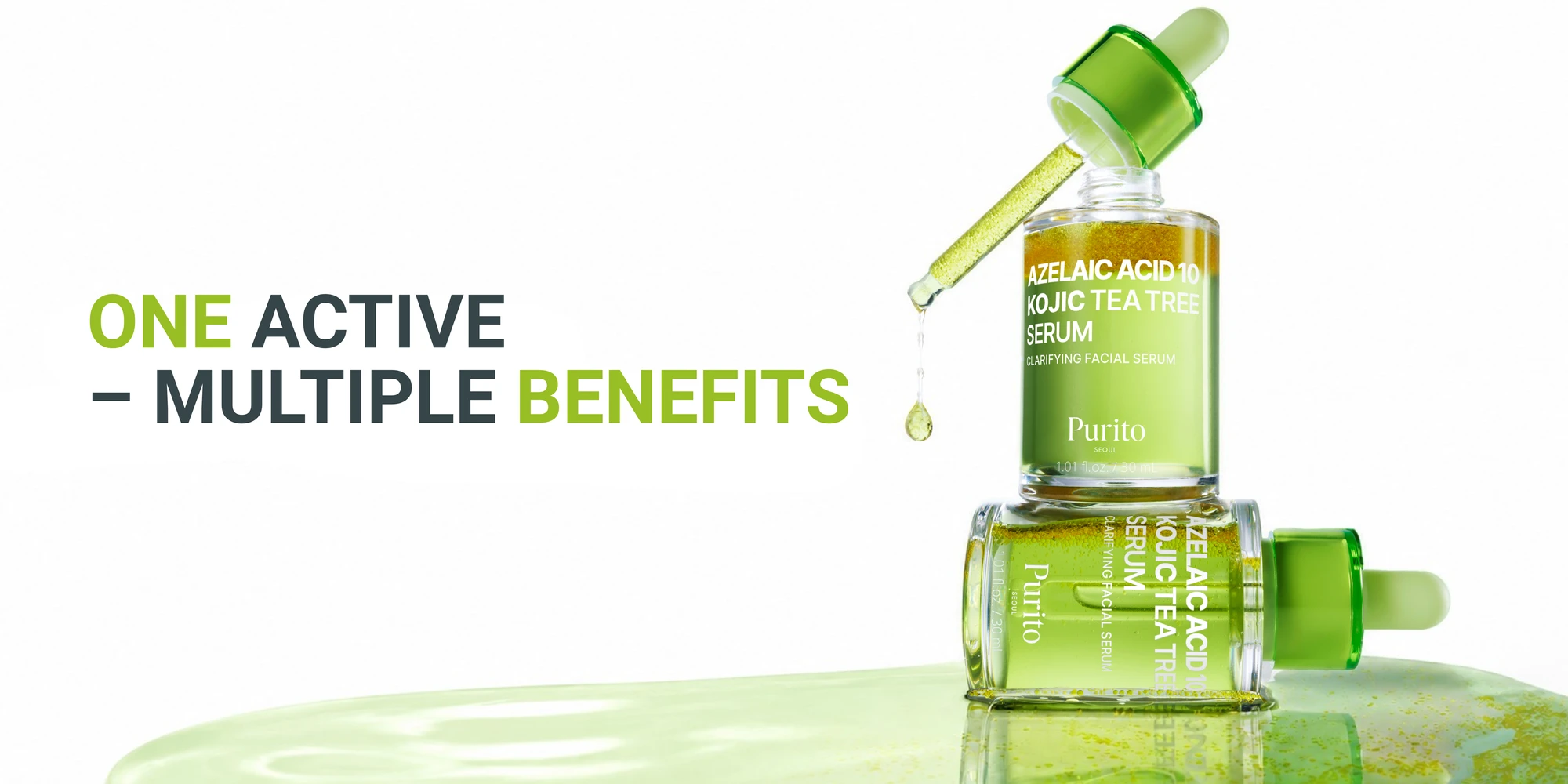
It’s hard to imagine skincare without active ingredients that work in several ways at once. And azelaic acid is exactly one of them. It helps with acne, post-acne marks, redness...

9/9/2026
Article content1. What Is Azelaic Acid and How Does It Work?2. Key Properties of Azelaic Acid3. Who Is Azelaic Acid Suitable For?4. How to Use Azelaic Acid Correctly5. What to Combine with Azelaic Acid and When to Be Careful6. When to Expect the First Results from Azelaic Acid7. Are There Any Side Effects?8. Azelaic Acid Products at Ksisters9. Conclusion
It’s hard to imagine skincare without active ingredients that work in several ways at once. And azelaic acid is exactly one of them. It helps with acne, post-acne marks, redness, and uneven skin tone 💖
Girls, it’s time to get to know it better 😊 Let’s find out what azelaic acid is, what you can combine it with, and how to add it to your routine correctly to get the most out of this active ingredient.
What Is Azelaic Acid and How Does It Work?
Azelaic acid is an organic dicarboxylic acid naturally found in grains. In small amounts, it can also be produced as a result of the activity of yeasts that are part of the normal microbiota.
Azelaic acid works in several ways at once. It helps with acne, clogged pores, and comedones, supports a more even skin tone, and helps make redness less noticeable 🦋 At the same time, azelaic acid does not directly reduce sebum production.
Key Properties of Azelaic Acid
Azelaic acid for the face has several useful properties. Let’s take a closer look at the main ones:
- Helps with acne. Azelaic acid affects Cutibacterium acnes bacteria associated with acne and helps care for skin prone to breakouts 🌹
- Helps with redness. Thanks to its properties, azelaic acid can be a useful ingredient in skincare for skin prone to redness and rosacea 🥀
- Helps with pigmentation. It affects the activity of tyrosinase, an enzyme associated with melanin production. It helps make post-acne marks and dark spots less noticeable and supports a more even skin tone 🏵️
- Care for skin prone to clogged pores. It helps normalize keratinization processes and prevent the formation of comedones, supporting a smoother skin texture 🌷
So if your skin occasionally surprises you with breakouts, redness, or uneven tone, azelaic acid is definitely worth your attention.
Who Is Azelaic Acid Suitable For?
Now that we’ve covered the theory, let’s move on to the main question — who is azelaic acid suitable for? 💚 Pay attention to it if your skin is prone to acne, you’re concerned about post-acne marks, or pigmentation. The key is to choose a suitable concentration, introduce your skin to the active gradually, and monitor its response ✨
Azelaic acid can also become a good friend for skin prone to redness and rosacea 💗 But if your skin is sensitive or reactive, introduce the active gradually — sometimes it can cause dryness, burning, or irritation. And if rosacea has already been diagnosed, it’s better to choose skincare and treatment together with a dermatologist.
This ingredient can also be suitable for oily skin prone to clogged pores and comedones. Azelaic acid does not directly reduce sebum production, but it can help with acne, clogged pores, and comedones 🥰
How to Use Azelaic Acid Correctly
Is azelaic acid appearing in your beauty routine for the first time? Then take your time getting acquainted with it. Here’s how to use azelaic acid so that your skincare remains comfortable for the skin and brings the desired results:
- In cosmetic products, azelaic acid is often found at a concentration of around 10%. Higher concentrations, including 15–20%, are also used in dermatology. The optimal concentration and frequency of use depend on your skin’s needs, the specific product, and how your skin responds to the active ingredient.
- Don’t rush into using the active every day right away. Introduce azelaic acid gradually, follow the instructions for the specific product, and pay attention to your skin’s reaction. Everything feels comfortable? Then you can slowly increase the frequency 📆
- Good news: azelaic acid does not increase photosensitivity in the same way as some other active ingredients, so it can be used all year round. But SPF in your morning routine is still a must-have, especially if you’re working on pigmentation 🌞
Morning or evening? In fact, azelaic acid can fit into both routines ✨ Consider the specific product and the other active ingredients in your skincare. For example, if you use AHA/BHA acids or retinoids in the evening, you can move azelaic acid to another time so you don’t overload your skin.
What to Combine with Azelaic Acid and When to Be Careful
Azelaic acid fits well into a routine with many popular ingredients. The main thing is to consider your skin’s needs and avoid adding several active ingredients at once, especially if you’re only just getting acquainted with them 💚
Niacinamide complements skincare with azelaic acid well and helps support a more even skin tone and overall skin comfort.
Hyaluronic acid is a good addition if your skin needs more hydration. It helps maintain an optimal moisture level and fits perfectly into a routine with active ingredients 💧
Ceramides can also be added to your skincare routine without hesitation. They help support the skin’s protective barrier and are especially useful when your routine includes active ingredients.
With AHA/BHA acids and retinoids, however, it’s worth being a little more careful. They can be combined with azelaic acid, but several active ingredients in one routine may be too intensive for the skin. If your skin is sensitive or you’re only just starting to use these ingredients, it’s better to introduce them gradually or use them at different times.
So if you’re wondering what you can combine azelaic acid with, remember this trio: niacinamide, hyaluronic acid, and ceramides can easily fit into the same beauty routine with it ✅
Choose azelaic acid products that can easily become part of your routine:
And instead of making a list of what you can’t combine azelaic acid with, it’s better to focus on your skin’s reaction. You don’t necessarily need to exclude AHA/BHA acids and retinoids — simply introduce them into your routine gradually and monitor your skin’s comfort 💗
When to Expect the First Results from Azelaic Acid
The main thing here is a little patience. How quickly results appear depends on the concentration of the product, how regularly you use it, and the condition of your skin. The first noticeable changes can usually be seen after several weeks of regular care.
More visible results for acne, post-acne marks, and pigmentation may take several months. So don’t rush to conclusions after the first few applications — give the active ingredient some time. And don’t forget SPF, especially if your goal is to make pigmentation less noticeable 🌤️
Are There Any Side Effects?
At the beginning of use, you may experience mild tingling, dryness, slight flaking, or mild irritation. In this case, pay attention to your skin’s reaction and reduce the frequency of use if necessary 😮💨
Strong burning, swelling, persistent redness, or pronounced irritation, however, are not something you should simply “put up with.” If these symptoms appear, stop using the product and seek professional advice.
To reduce the risk of irritation, it’s important to understand how to use azelaic acid correctly from the first days of use:
- Introduce the active into your routine gradually and increase the frequency according to your skin’s tolerance and the recommendations on the packaging.
- Use moisturizing products that support the skin barrier.
- Do not overload your routine with other strong active ingredients at the same time.
Before combining several active ingredients in one routine, consider the concentrations of the specific products and your skin’s response 📢
Azelaic Acid Products at Ksisters
Azelaic acid comes in different formats — from lightweight serums to creams and toner pads. So it’s easy to choose an option that fits comfortably into your routine ✨
Azelaic acid products come in different formats — serums, ampoules, creams, toners, and pads. Choose not so much based on the format, but on your skin’s needs and the formula of the specific product. Azelaic acid can be combined with peptides, hyaluronic acid, and other moisturizing and soothing ingredients. Such formulas easily complement your daily routine, help support a more even skin tone and skin comfort, and make post-acne marks and redness less noticeable ✨
Girls, the main thing here is not to look for the “strongest” format 💚 Focus on your skin’s needs, the concentration of the active ingredient, the formula of the specific product, and how comfortably it combines with the other steps in your routine.
Conclusion
Azelaic acid is a versatile active ingredient that can help with acne, post-acne marks, pigmentation, clogged pores, and redness. Overall, it is well tolerated, although sensitive or reactive skin may respond with dryness, burning, or irritation. The key is to choose a suitable product, introduce the active gradually, pay attention to your skin’s reaction, and don’t forget sunscreen.
Choose your azelaic acid product at Ksisters, introduce your skin to the active without rushing, and don’t forget SPF ☺️✨
This translation is AI-generated, so there might be some minor slip-ups 😌
Did you like the article?
support the author
8 likes